Email marketing for small business is one of the simplest ways to bring customers back: you collect emails from people who already know you, send them something useful or a good offer a few times a month, and track who clicks and buys. For a Miami business, that also means writing for both English and Spanish speakers and following the federal rules for commercial email.
Social media platforms can change what your followers see overnight. Your email list is different: it is a list of people who asked to hear from you, and you can reach them directly. This starter guide shows you how to build a list the right way, what to send, how to handle two languages, and which numbers to watch.
Key Takeaways
- Build your own list from customers and website visitors who opt in. Never buy an email list.
- Start with a welcome email, then send 2 to 4 helpful emails a month.
- Give every email one clear goal and one main button.
- In Miami, let subscribers choose English or Spanish instead of cramming both into every email.
- Follow the CAN-SPAM rules: honest subject lines, your postal address and an easy way to unsubscribe.
Contents
- Why email still works for small businesses
- Step 1: Build your list the right way
- Step 2: Set up a welcome email
- Step 3: Plan what to send each month
- Step 4: Write emails people open and click
- Step 5: Email in English and Spanish
- Step 6: Follow the email rules
- Step 7: Measure what matters
- Frequently Asked Questions
Why Email Still Works for Small Businesses
Email is not flashy, but it is practical. The people on your list already bought from you, visited your website or walked into your store. That makes them warmer than any stranger who scrolls past an ad.
- You own the list. If a social platform changes its rules or your account gets locked, your subscribers are still yours.
- It brings people back. A reminder about a seasonal menu, a new service or an appointment opening can turn a one-time customer into a regular.
- It supports everything else. Email can push people to your latest Instagram Reel, your Google reviews page or a new page on your website.
Step 1: Build Your List the Right Way
The best list is small and real, not big and bought. Purchased lists hurt your sender reputation, land you in spam folders and annoy people who never asked to hear from you. Instead, collect emails where customers already interact with you:
- A short sign-up form on your website, with a clear reason to join (for example, “first look at new menu items” or “monthly tips for homeowners”).
- A QR code at your counter, front desk or event table.
- Your booking or checkout process, with a checkbox to receive emails.
- A simple offer for new subscribers, like a free consultation or a welcome discount.
If your website makes sign-up hard to find, that is worth fixing. A clean website design puts the form where people will actually see it, especially on phones.
Step 2: Set Up a Welcome Email
The welcome email goes out automatically right after someone joins, while they still remember you. Keep it short:
- Thank them for joining and say what they will get, and how often.
- Deliver anything you promised, like the discount code or guide.
- Give one next step: book, order, visit or follow you on Instagram.
Set it once and it works for you every day, even when you are busy running the business.
Step 3: Plan What to Send Each Month
Most small businesses do well with two to four emails a month. Fewer and people forget you; more and they start to unsubscribe. Mix helpful content with offers so your emails are not just ads.
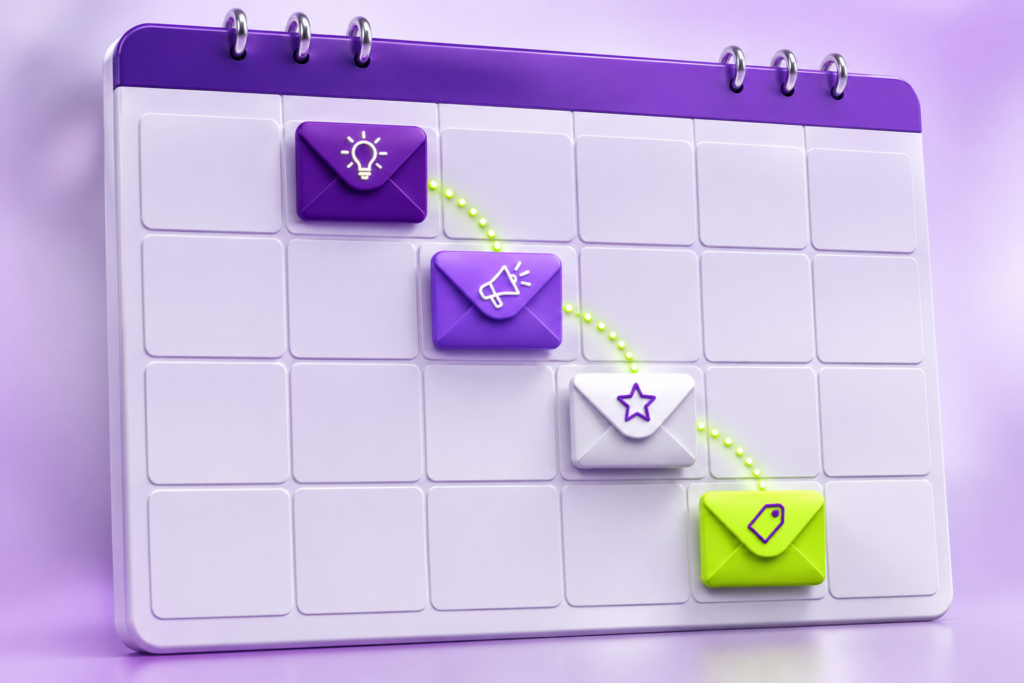
| Week | Email type | Example for a Miami business |
|---|---|---|
| Week 1 | Helpful tip | A roofer shares how to check a roof before hurricane season |
| Week 2 | News or update | A restaurant announces its new weekend brunch menu |
| Week 3 | Story or proof | A salon shows a before-and-after with the client’s permission |
| Week 4 | Offer | A dental office opens extra appointment slots for the month |
Need help coming up with ideas every month? Our content creation team can turn the same photos and videos you use on social media into email content, so nothing goes to waste.
Step 4: Write Emails People Open and Click
- Subject line: short, specific and honest. “New brunch menu starts Saturday” beats “You won’t believe this!”
- One goal per email: one main button, like “Book Now” or “See the Menu.”
- Write for phones: short paragraphs, big buttons and images that load fast.
- Sound like a person: sign it with a real name from your business, and invite replies.
- Use real photos: your team, your space and your work build more trust than stock images.
Step 5: Email in English and Spanish
In Miami, many customers prefer Spanish, many prefer English and plenty switch between both. Putting both languages in the same email makes it long and hard to read. A better approach:
- Ask for the preferred language on your sign-up form.
- Keep two segments in your email platform, one for each language.
- Write each version naturally instead of translating word for word. Offers, jokes and even subject lines often need to change.
The same idea works for social media. Our guide to bilingual social media marketing in Miami covers how to plan content in both languages without doubling your workload.
Step 6: Follow the Email Rules
Commercial emails in the United States must follow the CAN-SPAM Act. The FTC’s CAN-SPAM compliance guide explains the requirements. A few of the basics:
- Do not use misleading “From” names or subject lines.
- Include your valid physical postal address in every marketing email.
- Give people a clear, easy way to unsubscribe, and honor opt-out requests within 10 business days.
- If you hire someone to send your emails, you are still responsible for following the law.
This is not legal advice, so check the FTC guide or ask your attorney if you are unsure about your situation.
Step 7: Measure What Matters
Open rates are less reliable than they used to be, because some email apps load images automatically, which can count as an “open.” Focus on numbers tied to real business:
- Clicks on your main button.
- Replies, bookings, orders or calls that came from an email.
- Unsubscribes after each send. A spike means the topic or frequency missed the mark.
- List growth each month from your website, store and events.
Promoting an event soon? Pair your emails with the steps in our guide on how to promote a business event.
Frequently Asked Questions
How often should a small business send marketing emails?
Two to four emails a month works well for most small businesses. It keeps you top of mind without overwhelming people. Watch your unsubscribes and adjust if they rise.
Can I buy an email list to grow faster?
We do not recommend it. People on purchased lists never asked to hear from you, so they tend to ignore or report your emails, which can push your future emails into spam folders.
Should I send emails in English, Spanish or both?
Let subscribers choose. Ask for their preferred language when they sign up, then send each group an email written naturally in their language instead of one long email with both.
Do small businesses have to follow CAN-SPAM?
Yes. The rules apply to commercial email from businesses of any size, including business-to-business email. The FTC’s compliance guide lists the requirements, such as including your postal address and an easy way to opt out.
Want Help With Email Marketing in Miami?
Since 2011, 1111 Media Group has helped Miami businesses stay in touch with their customers. Our bilingual team plans, designs and sends email marketing campaigns that match your social media and website, with clear monthly reports. Our ongoing services are month to month, with no contract.
Not ready to talk yet? Take the free Marketing Score quiz to see where your marketing stands today.